The Indian Act
Understanding the foundational legal document that governed and restricted the lives of Indigenous peoples in Canada for over a century.
Indian Act 1876
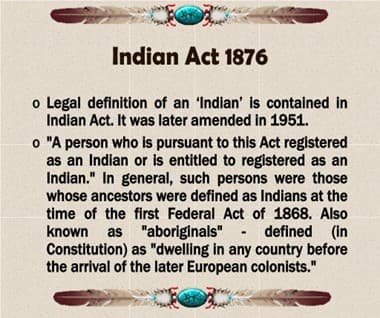
Passed in 1876, the Indian Act is the primary law the Canadian federal government uses to administer both 'Indian' status and local band governments. It historically defined 'Indians' as anyone dwelling in the country before the arrival of later European colonists and was later heavily amended in 1951.
Defines the legal status of an 'Indian' in Canadian Law
Registration is restricted to those whose ancestors were defined as 'Indian' in 1868
Commonly referred to as 'Aboriginals' in the Constitution
Control and Coercion
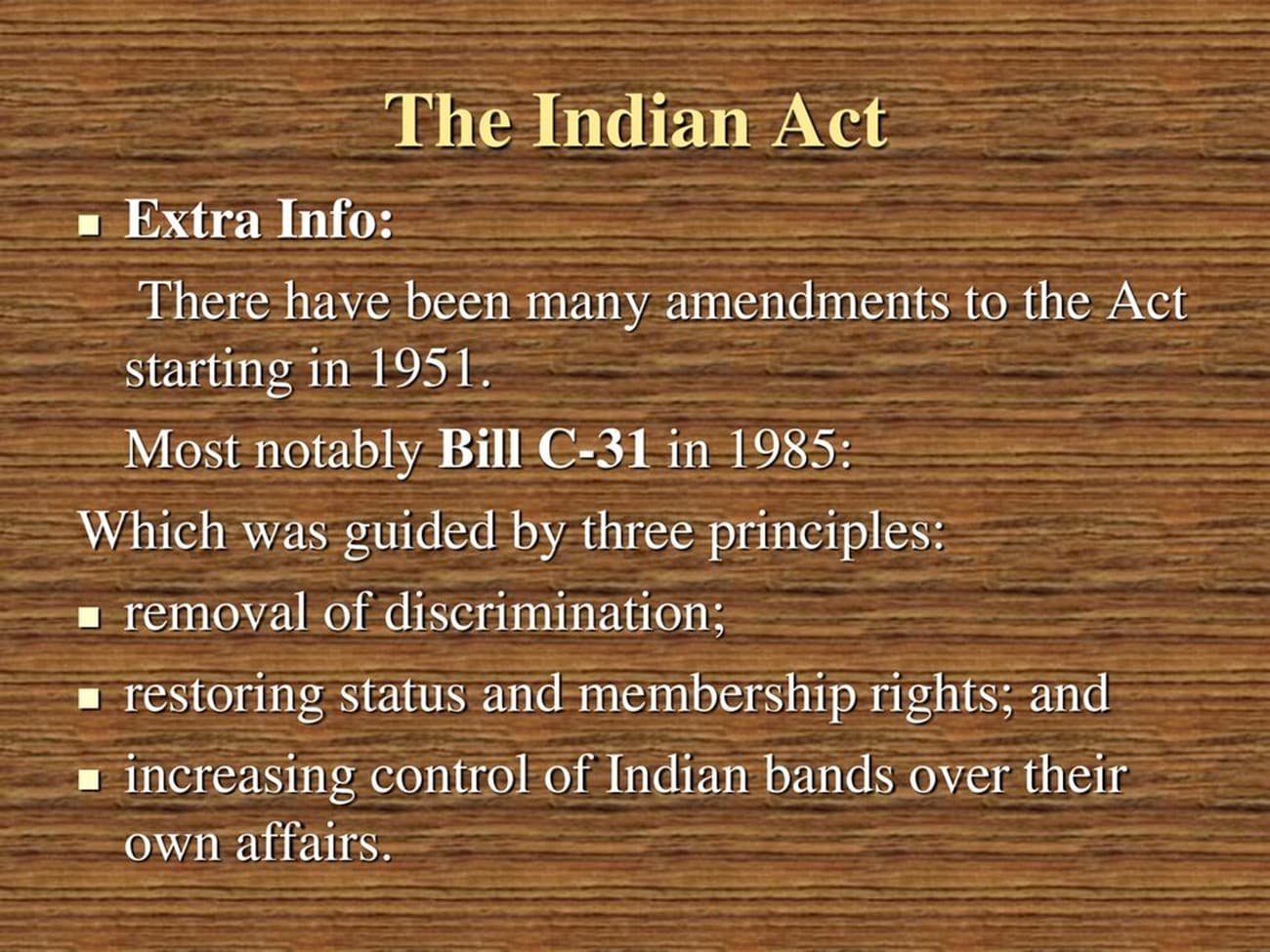
The Act was passed without consultation with First Nations people. It was built on the flawed belief in European superiority, leading to laws that required permission to wear traditional clothing, banned sacred ceremonies, and prevented common political and collective actions.
Banned traditional ceremonies and rituals
Required government permission for traditional clothing
Forced First Nations peoples to live on reserves
Prevented organized political actions
Loss of Rights & Status
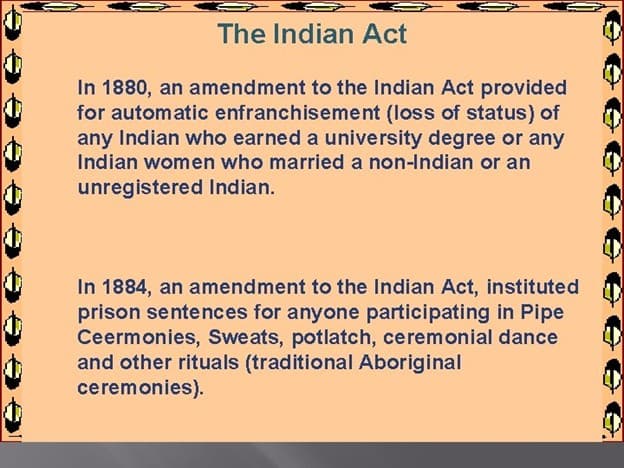
Amendments through the late 19th century further targeted Indigenous identity. The 1880 amendment provided for 'automatic enfranchisement,' essentially stripping status from any Indigenous person who earned a university degree or any Indigenous woman who married a non-Indigenous man.
Automatic enfranchisement (loss of status) for university graduates
Loss of status for women marrying non-Status men
Prison sentences for participating in ceremonies (Sweats, Potlatch, etc.)
Towards Restoration
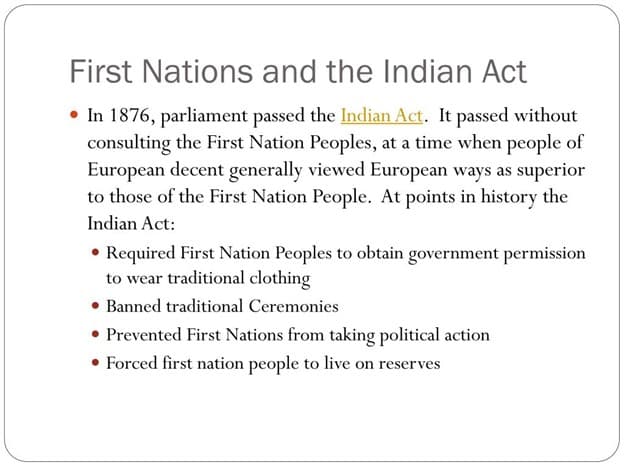
Major shifts began occurring with amendments starting in 1951. Most notably, Bill C-31 in 1985 introduced key principles meant to remove discrimination and restore status to those who had lost it. This marked a turn toward increasing band control over their own affairs.
Bill C-31 (1985) sought the removal of discriminatory clauses
Restoring status and membership rights to thousands
Increasing control of Indian bands over their own affairs